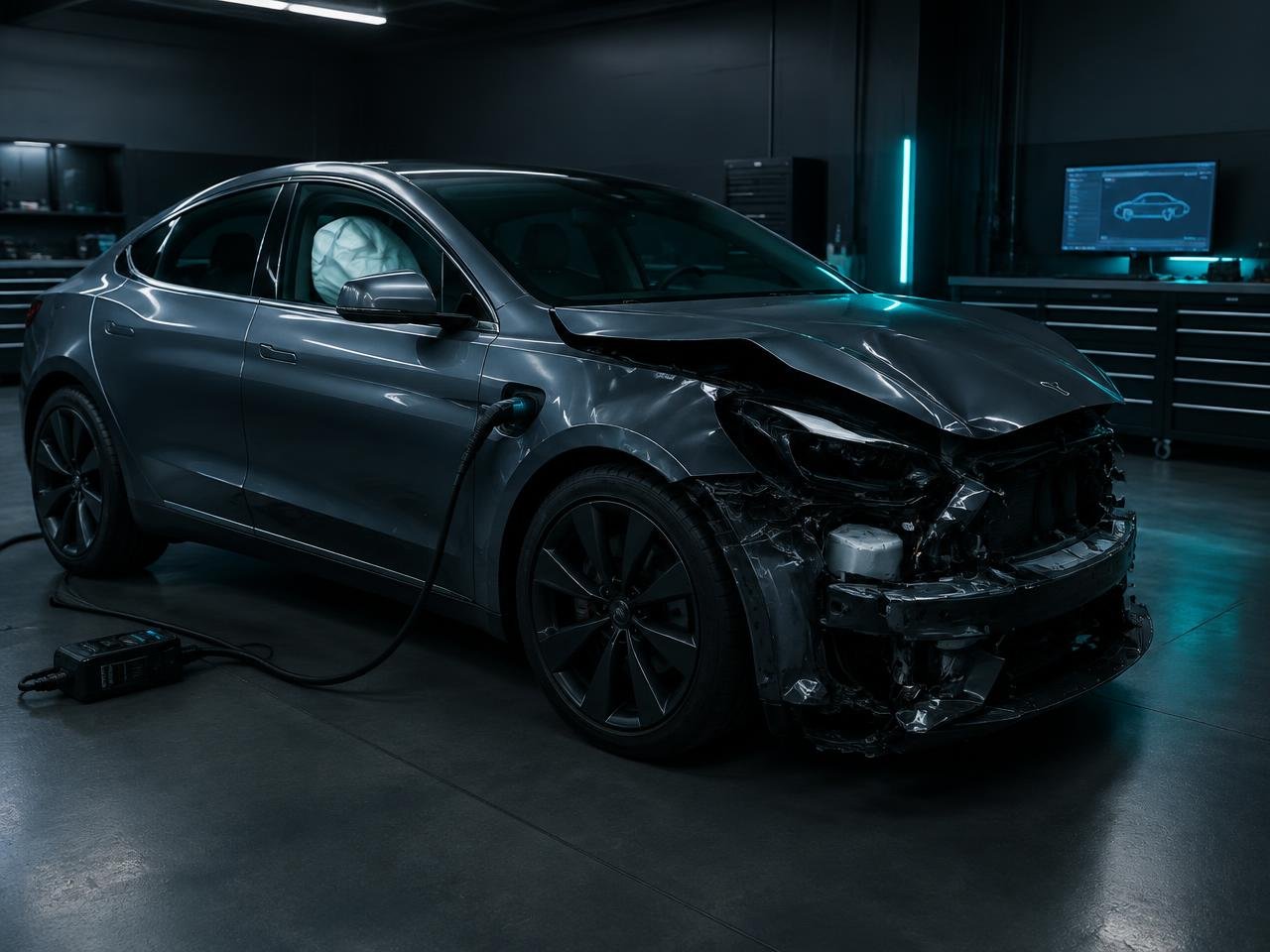
Sound familiar?
- Car will not wake up, drive or go into gear after a crash
- Warning messages on the touchscreen that won't clear
- Safety-system or airbag messages after an impact
- Told the pyrofuse has operated or needs attention
- Bodywork repaired but the car still reports faults
- Bought a damaged Tesla and need to know what it really needs
Why Teslas behave differently after a collision
Teslas rely on a network of control modules talking to each other constantly. An impact can damage wiring, connectors and modules, and the car's own safety logic is designed to respond to a crash by protecting occupants and isolating systems.
That means a Tesla can look nearly fine from the outside yet refuse to start, show a list of alerts, or disable features. Fixing the panels is sometimes only half the job.
What we can look at
Every car is assessed individually. Depending on what we find, this may include:
- Post-crash electrical fault diagnosis
- Starting and 'won't wake up' problems
- Safety-system and SRS-related faults
- Pyrofuse-related faults
- Control-module communication problems
- High-voltage system-related diagnostic concerns (assessment, not DIY advice)
A word on high voltage
Electric vehicles carry high-voltage systems that can be dangerous when damaged. Please don't attempt to investigate or repair high-voltage components yourself. If the car has been in an accident, the safest first step is to send us details and photos so we can advise.
What to do next if your Tesla has been in an accident
- 01 Don't keep trying to force it to start or charge if it reports faults.
- 02 Photograph the damage, the touchscreen alerts and the VIN plate.
- 03 Note what happened: impact location, airbags deployed, what stopped working.
- 04 Send those details to Adam for an initial assessment.